Measurement-based Quantum Computation
Transform gate-based programs into measurement-based quantum computation (MBQC).
Measurement-based execution
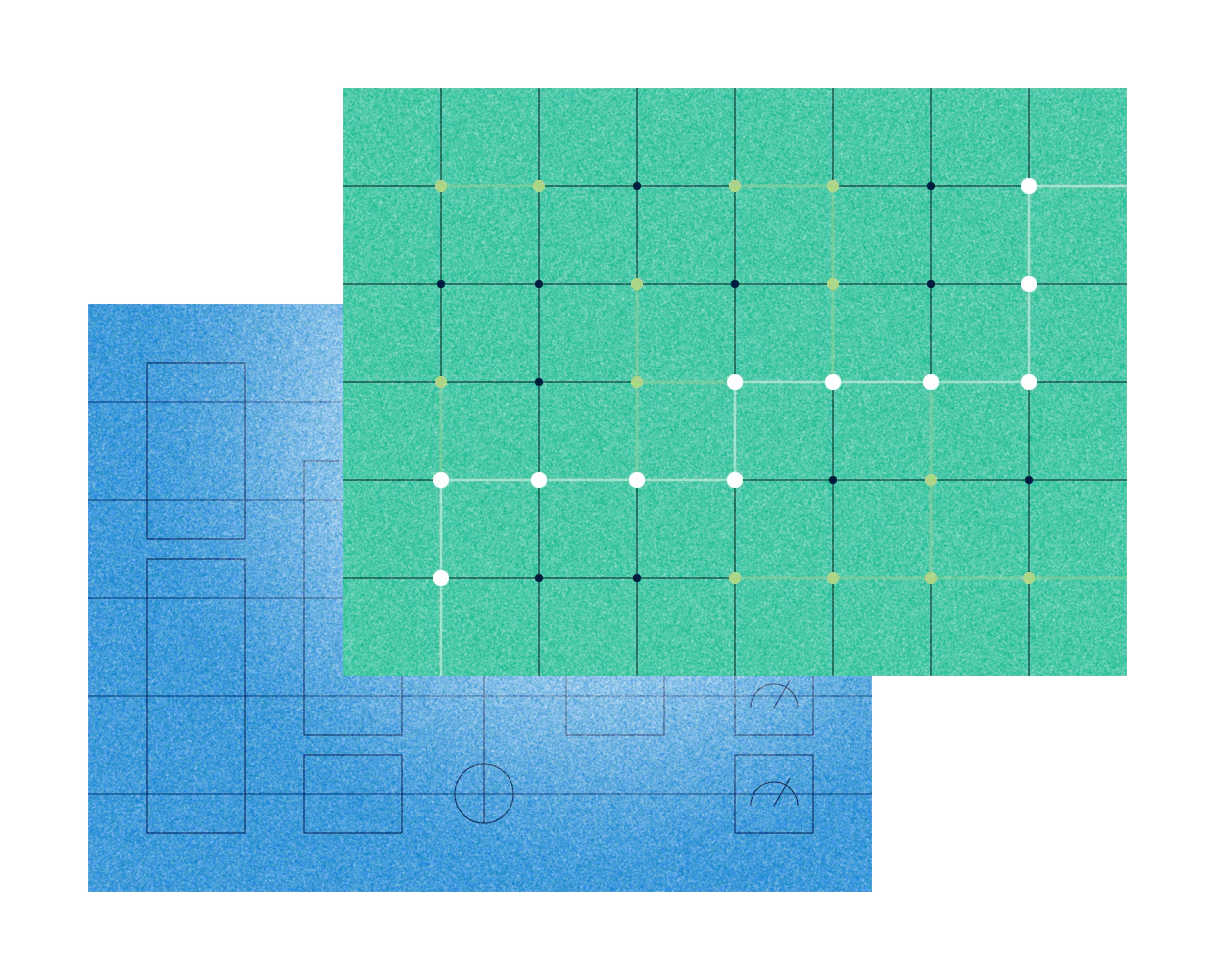
Triple Alpha can compile gate-based programs directly into the MBQC framework, allowing developers to explore alternative computational models within the same environment.
What is MBQC?
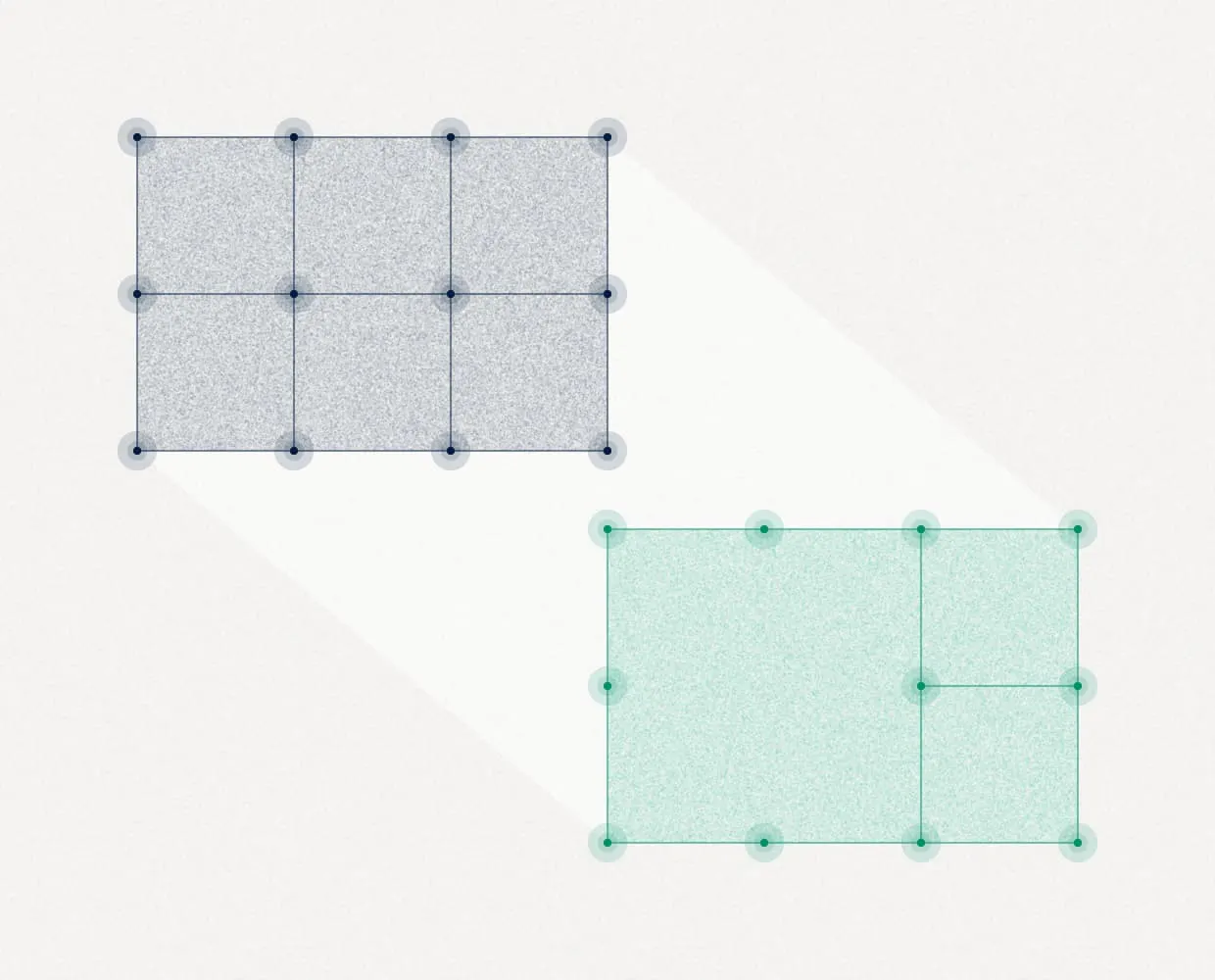
In MBQC, measurements drive computation on a highly entangled initial state—a graph state. In a graph state, each qubit is first prepared in an equal superposition of 0 and 1, then entangled using CZ gates according to the structure of the underlying graph. MBQC relies on these pre-prepared graph states and local measurements.

Why explore alternatives to gate-based models?
MBQC offers a practical route to scalable photonic quantum computing and allows for more straightforward implementation of privacy-protection protocols than gate-based computation.

Implementing entangling operations on a photonic quantum computer is fundamentally challenging because photons do not naturally interact with one another. Linear-optical approaches to quantum computing require measurements to induce entanglement. MBQC is an efficient, natural way of implementing computation in photonic systems.

MBQC has proven to be a critical enabling technology for securing quantum computation on untrusted devices. It’s at the heart of many verifiable and blind quantum computing protocols that address the privacy concerns arising from the cloud-based execution of quantum workloads.
Measurement-based execution in Triple Alpha
Control flow integration
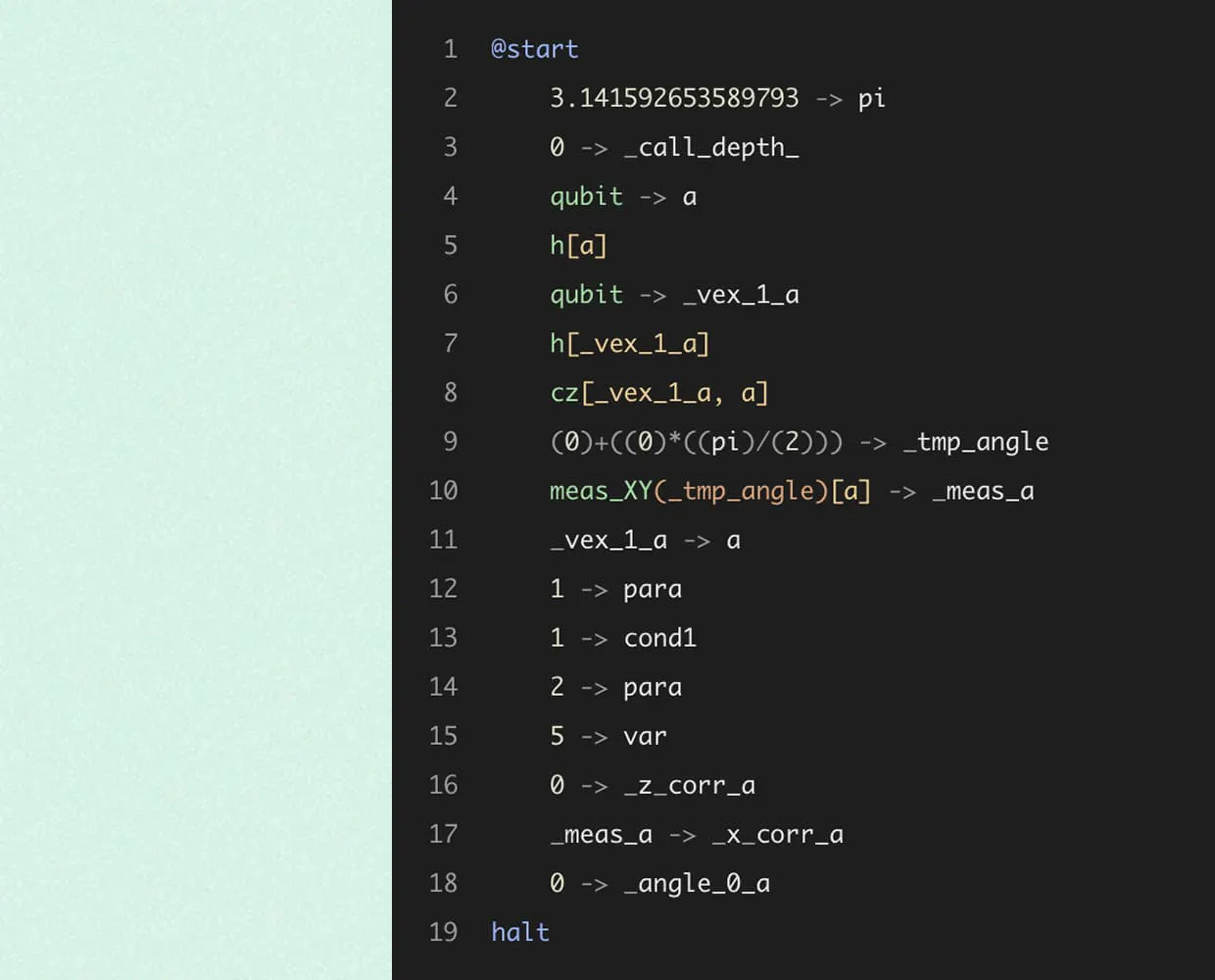
Triple Alpha translates gate-based quantum programs to the MBQC model at the Hydrogen level, preserving control flow and making the resulting representation Turing-complete. Each block in the converted program contains only state preparation, single-qubit measurements, and classical operations.
Efficient graph-state usage
The MBQC conversion process automatically eliminates Pauli basis measurements, reducing the number of qubits required for computation and enabling larger, more complex quantum programs to run more efficiently on current hardware.